
 Español
 Русский
 Français
 Deutsch
 简体中文
简体中文
 Árabe
Árabe
 Português
 日本語
日本語
 한국어
한국어
 हिंदी
हिंदी
 Prancis
 Türkçe
 Tiếng Việt
 Italiano
 ไทย
ไทย
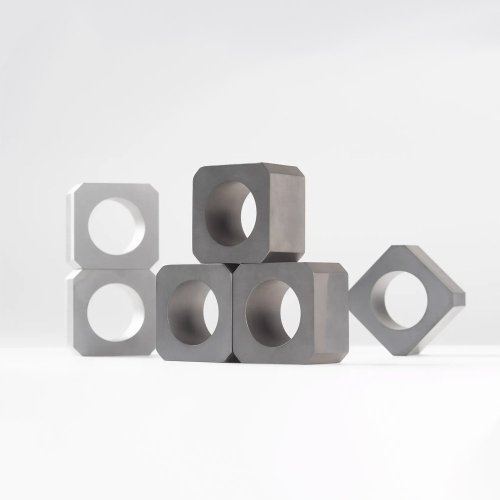
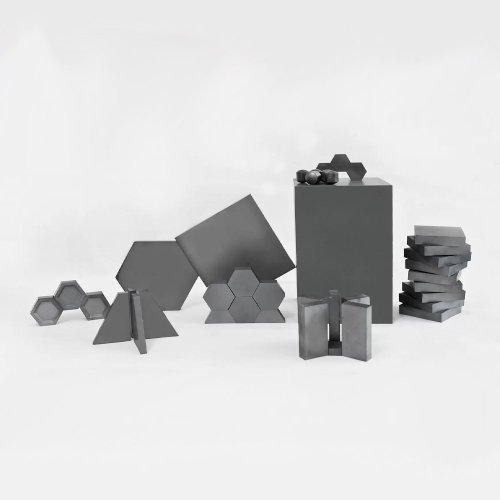
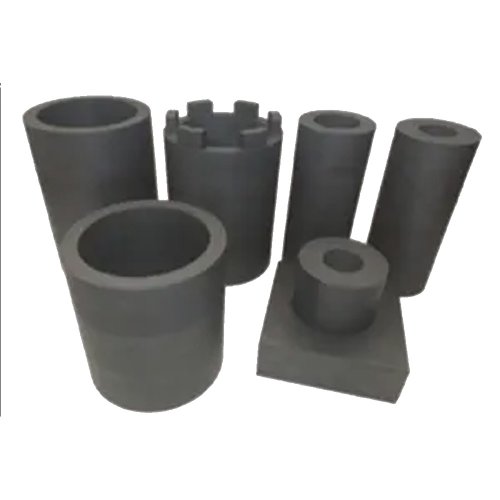
Nuclear-Grade Boron Carbide: The Key Material at the Heart of Nuclear Reaction Control
In the chain of nuclear energy safety, there is a material that, while little known to the public, plays a critical role as a "silent guardian"—nuclear-grade boron carbide (B₄C). With the boron-10 (¹⁰B) isotope possessing a thermal neutron absorption cross-section as high as approximately 600 barns, boron carbide can efficiently absorb neutrons without producing strong secondary radiation, making it an irreplaceable material for nuclear reactor control rods, shielding components, and spent fuel storage containers.
I. Why Are the Requirements for Nuclear-Grade Boron Carbide So Stringent?
Unlike ordinary industrial-grade boron carbide, nuclear-grade products demand extremely high standards of purity, density, and performance stability.
Boron carbide itself is a difficult-to-sinter material, with a stable lattice structure and extremely low self-diffusion coefficient, making densification challenging. Research indicates that boron carbide ceramics used in control rods for high-temperature gas-cooled reactors require a porous interconnected structure to facilitate the timely release of helium gas generated after neutron absorption, preventing material swelling and failure. This means that nuclear-grade boron carbide must not only achieve high-purity standards in chemical composition but also realize precise control over its microstructure.
II. The International Race in Preparation Processes
According to the latest research published in EPJ Nuclear Sciences & Technologies in June 2026, there are currently two main industrial synthesis routes for nuclear-grade boron carbide powder:
Carbothermal Reduction Method
This method uses boric acid (or boron oxide) and carbon as raw materials, reacting at high temperatures. The advantage is that it yields products with relatively high chemical purity. However, the drawback is significant boron loss due to oxide volatilization—isotopic boron loss rates reach 25%–35%—and the resulting products are flake-like particles prone to boron deficiency.
Direct Elemental Synthesis Method
This method uses elemental boron and carbon directly as raw materials. The advantage is precise control over the boron-to-carbon ratio, with products exhibiting polyhedral particle morphology and isotopic boron loss rates of only 5%–6%. The drawback is that the raw boron itself may introduce impurities, requiring mechanochemical treatment to achieve nuclear-grade purity.
In addition, the magnesiothermic reduction method is also considered an effective approach for obtaining high-purity nuclear-grade boron carbide, with total impurity content controllable within 0.35 wt%. However, it still faces technical challenges such as magnesium oxide entrainment, requiring further research and development.
III. Sintering Technology: The Critical Leap from Laboratory to Engineering Applications
For the fabrication of nuclear-grade boron carbide components, powder synthesis is only the first step; sintering and forming is the core link that determines the final performance.
Pressureless Sintering
Traditional pressureless sintering requires temperatures above 2300°C, consuming enormous energy and tending to cause grain coarsening, which impairs mechanical properties. For nuclear-grade products, grain coarsening leads to uneven microstructure, affecting neutron absorption and gas release performance.
Hot Pressing Sintering
By applying mechanical pressure at high temperatures, this method effectively lowers the sintering temperature and improves density. Research in the nuclear power field has successfully produced high-density boron carbide pellets meeting nuclear service requirements through hot pressing sintering technology.
Spark Plasma Sintering (SPS)
An advanced technology that has gained significant attention in recent years, SPS ramps up the heating rate to hundreds of degrees Celsius per minute, achieving densification in a short time while suppressing grain growth and obtaining a fine, uniform microstructure. It represents a cutting-edge approach for preparing high-performance nuclear-grade boron carbide ceramics.
IV. Global Market and Technology Trends
From a global perspective, the nuclear-grade boron carbide market exhibits the following characteristics:
High Technical Barriers, Concentrated Suppliers
Nuclear-grade boron carbide demands extremely high product consistency and batch-to-batch stability, with long certification cycles and significant barriers to entering the nuclear industry supply chain. Globally, the number of enterprises with stable supply capabilities is limited, with technical expertise and engineering experience serving as key barriers.
Nuclear Expansion Drives Demand
Global nuclear power construction is entering a new cycle of recovery. The advancement of fourth-generation high-temperature gas-cooled reactors, fast neutron reactors, and small modular reactors (SMRs) is driving demand for nuclear-grade boron carbide—not only in terms of volume but also in increasingly diverse and demanding performance requirements.
Accelerated Material Evolution
Traditional boron carbide ceramics are moving toward structural and functional integration. Researchers are exploring composite material systems combining boron carbide with metals (such as aluminum and titanium) to enhance mechanical properties and processability while maintaining neutron absorption capability, meeting the demands of emerging applications such as dry spent fuel storage and transport.
V. Outlook
Nuclear-grade boron carbide is a fundamental safety assurance material for the nuclear industry. From powder synthesis to ceramic forming, from laboratory research to engineering applications, scientists and engineers around the world continue to tackle remaining challenges. As next-generation nuclear power technologies accelerate toward engineering deployment, improvements in the performance and cost control of nuclear-grade boron carbide will be an important part of the high-quality development of the nuclear energy industry.
There is no end to technological advancement. On this materials frontier that concerns nuclear safety, the true "guardian" is always the relentless pursuit of ultimate performance.