
 Español
 Русский
 Français
 Deutsch
 简体中文
简体中文
 Árabe
Árabe
 Português
 日本語
日本語
 한국어
한국어
 हिंदी
हिंदी
 Prancis
 Türkçe
 Tiếng Việt
 Italiano
 ไทย
ไทย
Boron Carbide: The "Safety Guardian" of the Nuclear Industry
In the utilization of nuclear energy, safety is an eternal theme. Controlling the rate of nuclear fission reactions and ensuring the safe storage and transport of nuclear fuel both rely on a special class of materials—neutron-absorbing materials. Boron carbide (B₄C), with its unique neutron absorption characteristics, has become an irreplaceable critical material in nuclear reactors and spent fuel management.
I. Why Boron Carbide?
The core advantage of boron carbide lies in the high neutron absorption capacity of the boron element. The boron-10 (¹⁰B) isotope possesses a thermal neutron absorption cross-section as high as approximately 600 barns, enabling efficient neutron absorption without producing strong secondary gamma radiation. This means:
High absorption efficiency: A small amount of boron carbide can achieve effective neutron shielding
Easy waste disposal: It does not produce radioactive isotopes after neutron absorption, making waste treatment relatively simple.
Good chemical stability: Resistant to acid and alkali corrosion, capable of long-term service in the harsh environments of nuclear reactors
It is precisely these characteristics that make boron carbide the second most important functional material in nuclear reactors, after nuclear fuel elements.
II. Core Application Scenarios in the Nuclear Industry
1. Reactor Control and Regulation
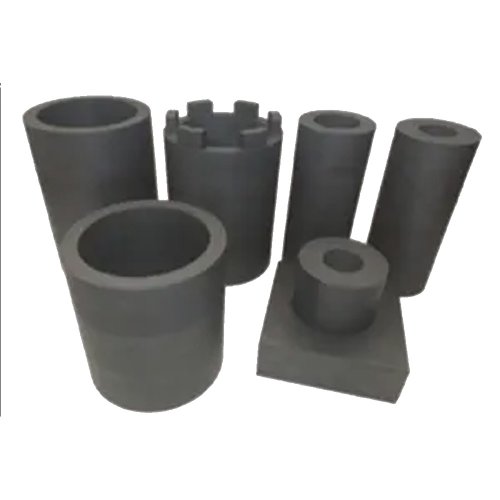
Boron carbide is widely used in the manufacture of control rods, regulating rods, emergency rods, safety rods, shielding rods, and other critical components for nuclear reactors. These rod-shaped assemblies regulate neutron flux by being inserted into or withdrawn from the reactor core, thereby precisely controlling the rate of nuclear fission reactions—functioning as the "accelerator and brake" of the nuclear reactor.
2. Spent Fuel Storage and Transport
After nuclear fuel is "burned," the resulting spent fuel remains highly radioactive and requires long-term safe storage. Neutron-absorbing plates made of boron carbide materials are extensively used in spent fuel storage pools and transport containers.
In this regard, boron carbide-reinforced aluminum (B₄C/Al) composite materials have been a technological highlight in recent years. This material, which incorporates boron carbide particles into an aluminum matrix, offers high boron content, low density, and high thermal conductivity. It has already replaced traditional boron-containing stainless steel abroad and has become the preferred material for high-density storage and transport of spent fuel.
3. Radiation Shielding Protection
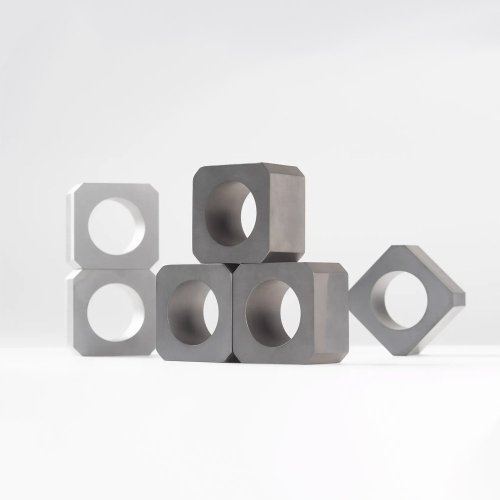
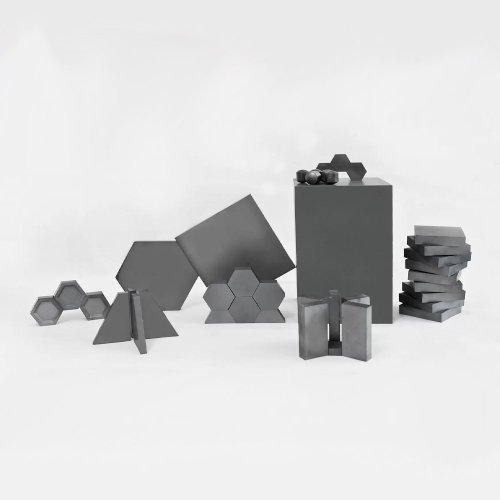
Boron carbide can also be made into boron carbide tiles, plates, or neutron absorbers for radiation shielding layers around nuclear reactors, or mixed with cement to create shielding walls, providing safety protection for nuclear facility personnel.