
 Español
 Русский
 Français
 Deutsch
 简体中文
简体中文
 Árabe
Árabe
 Português
 日本語
日本語
 한국어
한국어
 हिंदी
हिंदी
 Prancis
 Türkçe
 Tiếng Việt
 Italiano
 ไทย
ไทย
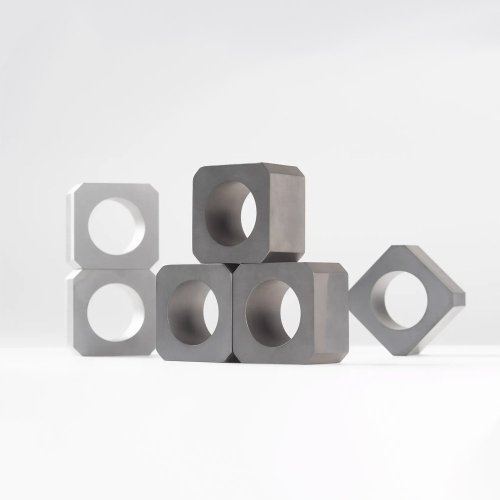
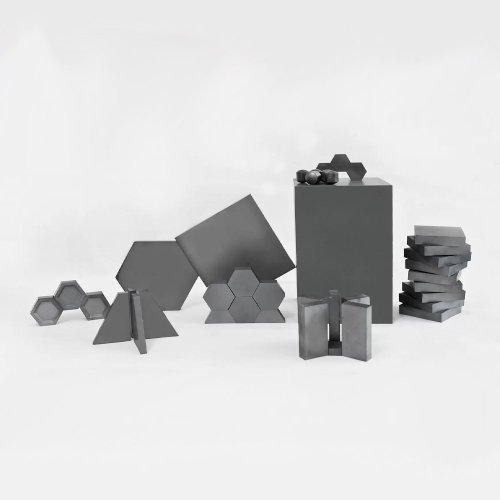
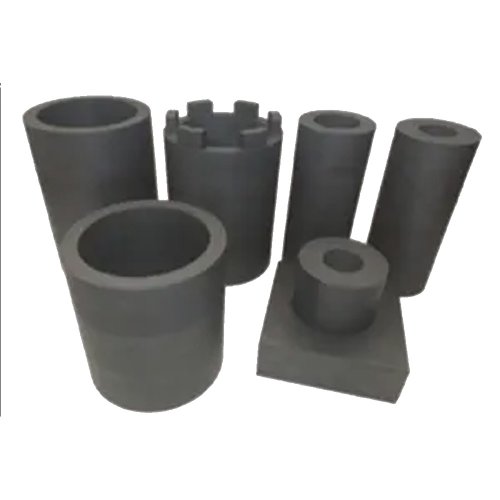
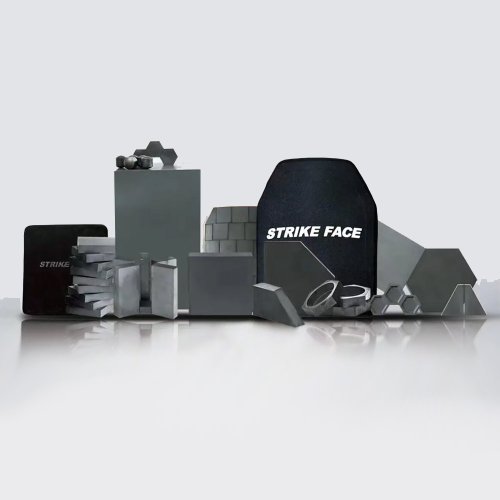
Boron Carbide: From "Industrial MSG" to "Hardcore Pillar" of Strategic Advanced Materials
In the brilliant constellation of materials science, boron carbide (B₄C) may not be the most dazzling star, but it is certainly one of the most "hardcore." This black, powdery superhard ceramic material ranks third in hardness, after diamond and cubic boron nitride, yet with a density far lower than both (only 2.52 g/cm³), earning it the title of "King of Lightweight Armor."
I. Ultimate Performance, Redefining Material Excellence
Boron carbide's outstanding performance stems from its unique crystal structure. It has a hexagonal rhombohedral lattice, with each unit cell composed of 12 boron atoms and 3 carbon atoms. This structure endows it with a series of remarkable properties: microhardness of approximately 50 GPa, second only to diamond and cubic boron nitride; a melting point as high as 2450°C; low coefficient of thermal expansion and excellent thermal stability; as well as good chemical corrosion resistance, wear resistance, and semiconducting properties.
Particularly noteworthy is boron carbide's unique neutron absorption capability. It can absorb large numbers of neutrons without forming any radioactive isotopes, making it an ideal neutron absorber in the nuclear energy field. Even at high temperatures, boron carbide maintains stable neutron absorption performance, ensuring the safety and controllability of nuclear reactions.
II. Diverse Applications, Safeguarding National Economy and People's Livelihoods
With these "diamond-like" properties, boron carbide has taken on many demanding tasks:
The "Safety Guardian" of the Nuclear Industry. Boron carbide is widely used in nuclear reactor control rods, neutron-absorbing spheres, and other critical components. Aluminum-based boron carbide neutron-absorbing materials, with their high boron content, low density, and high thermal conductivity, have become the preferred choice for high-density storage and transport of nuclear fuel. Some domestic enterprises have successfully been included in the nuclear industry supply chain through their independently developed nuclear-grade boron carbide products.
III. Industry Trends: Technological Breakthroughs and Industrial Upgrades
The boron carbide industry is currently entering a golden period of technological breakthroughs and industrial upgrading. In terms of preparation processes, researchers are exploring multiple innovative routes—from high-pressure sintering to achieve higher hardness and fracture toughness in ceramics, to green synthesis of high-performance boron carbide ceramics using crystalline silicon cutting waste as a sintering aid; from rapid preparation of submicron boron carbide particles via Joule heating, to ultrasonic hot-pressing sintering technology that breaks through the 2000°C bottleneck.
In processing technology, water‑guided laser technology has brought revolutionary breakthroughs to the machining of superhard boron carbide materials. This technique combines a laser beam with a fine water jet, enabling precision processing with minimal heat‑affected zones, significantly improved machining quality, and high energy utilization.
At the industrial level, domestic boron carbide enterprises are moving from "being controlled by others" to "independent and controllable." Some companies have extended their industrial chains upstream, investing in projects with annual production capacities of thousands of tons of ceramic boron carbide, achieving self‑sufficiency in core raw materials. Their products sell well in more than 30 countries and regions. At the same time, industry standards for boron carbide technical specifications are currently open for public comment, marking an important step toward standardized industry development.
IV. Market Prospects: A Steadily Growing Strategic Sector
Market data show that the boron carbide industry is on a steady upward trajectory. The global boron carbide market was valued at approximately USD 147 million in 2024 and is projected to reach USD 213 million by 2033, with a compound annual growth rate (CAGR) of 4.2%. The high‑purity boron carbide powder market is also growing robustly, with a 2024 value of about RMB 2.87 billion and an expected approach to RMB 3.75 billion by 2031.
As demand for industrial wear‑resistant materials upgrades, the semiconductor industry expands, and the application fields of specialty ceramics continue to broaden, the market space for boron carbide will further expand. From nuclear energy to defense and military, from semiconductors to aerospace, boron carbide is writing a new chapter in the era of strategic advanced materials with its "hardcore" strength.