

 Español
 Русский
 Français
 Deutsch
 简体中文
简体中文
 Árabe
Árabe
 Português
 日本語
日本語
 한국어
한국어
 हिंदी
हिंदी
 Prancis
 Türkçe
 Tiếng Việt
 Italiano
 ไทย
ไทย
Advantages of Boron Carbide Powder
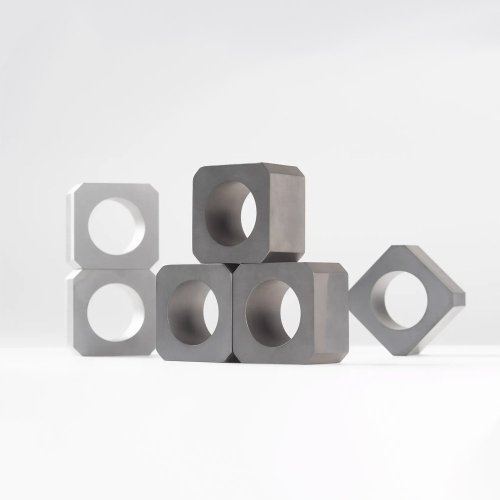
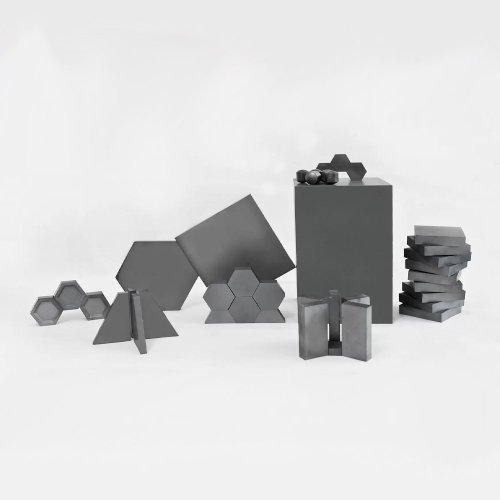
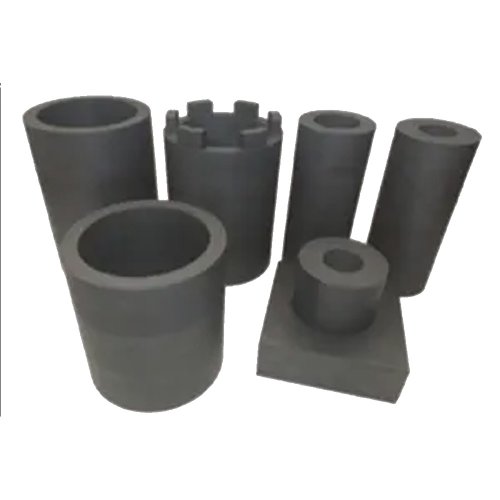
Boron Carbide (B4C) is one of the hardest materials known, ranking third behind diamond and cubic boron nitride. Originally discovered as an abrasive in the mid-19th century, boron carbide powder finds widespread use in grinding and polishing applications for metals like steel. Fully sintered boron carbide shapes are used in the manufacture of blasting nozzles, hard ceramic bearings and thread guides for wire drawing dies.
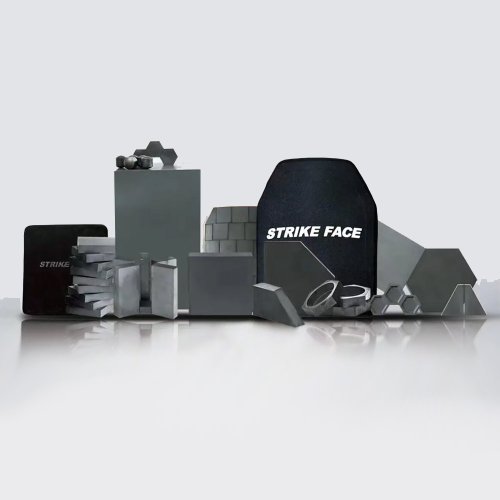
Due to its high stiffness, boron carbide is an excellent cutting and grinding medium, as well as an effective tool for hard-material machining. Its exceptional hardness, low density and chemical inertness make it a critical material for ballistic armor systems, nuclear reactor control rods, abrasive applications and emerging high-temperature structural components 1,2.
B4C is highly brittle, with a Mohs hardness rating between 9 and 10. This stiffness makes it ideal as a cutting tool, but also gives it its characteristic strength. This strength enables it to resist impact damage, and abrasions in harsh working environments. In fact, you’ll find boron carbide in everything from high-security padlocks to tear-resistant coatings. It’s even found in some aircraft, where weight control is very important.
When sintering, a high temperature is required for the B4C to form its hard, dense state. However, this creates a drawback, as the B4C shrinks by about 20% during the process. This leads to dimensional tolerance issues, which can be difficult to resolve. In some cases, a pre-sintered state known as green or biscuit may be machined to achieve tighter tolerances than the final, fully sintered product.
A variety of synthesis techniques are available for producing boron carbide powder, ranging from traditional carbothermal reduction and magnesiothermic processes to plasma-assisted routes and polymer-derived ceramic approaches 3,4. Each method delivers unique advantages in terms of the resulting particle size distribution, phase purity and surface chemistry, which directly impacts densification behavior and final component performance 1,5.
In addition to their superior hardness, boron carbide powders exhibit high thermal stability, with a melting point above 3000°C. The chemical inertness of boron carbide means that it is not susceptible to corrosion, which makes it an essential material for manufacturing wear parts and other industrial tools.